



Killer Island and REAP: Localization Case Study

Killer Island and REAP: Localization Case Study
Killer Island and REAP: We Reap What Crawls are new projects developed by Tbjbu2. Both games are co-ops. Such projects require an especially accurate translation: the interface, hints, and in-game instructions not only directly affect the atmosphere, but also the ability of players to cooperate with each other.
We worked with Tbjbu2 on localization tasks for both projects. This case study will tell you all about what that involved.
About Killer Island and REAP: We Reap What Crawls
Both games build on a foundation of teamwork to progress through the game and a tense atmosphere, where the slightest textual inaccuracy may result in the loss of the desired effect.
Killer Island
Killer Island is a co-op deduction survival horror game for 3-8 players, set on a fog-covered island where one among you hides a deadly secret. Players must chop wood to stay warm, hunt animals for food, and collect mysterious artifacts for sacrifice — all while trying to uncover the hidden killer before it’s too late. With the voice chat, every whisper, lie, and accusation can change the outcome. Each short, replayable match becomes a tense battle of trust and betrayal, where cooperation is vital — but no one is truly safe.
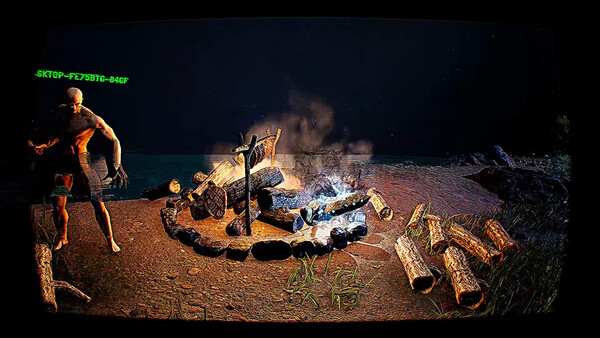
Killer Island. Source
REAP: We Reap What Crawls
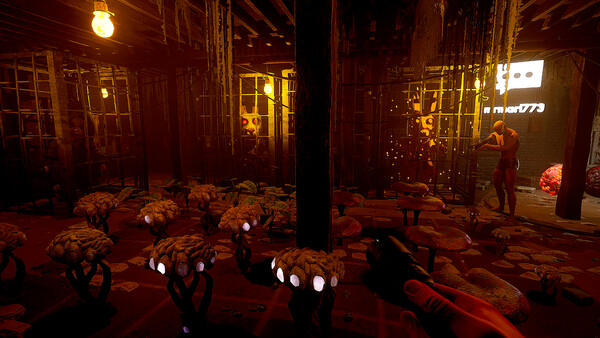
REAP is a co-op horror dungeon crawler with creature collection and farming elements. The player controls a hunter who fights hordes of monsters in dungeons. Procedurally generated levels, the variety of weapon types, and characters’ unique abilities create a high replay value, or level of replayability. Every new run depends on the player’s attention to detail, and their reaction time is put to a serious test, while the atmospheric visual effects and tense soundtrack intensify the immersive effect.
REAP: We Reap What Crawls. Source
The team at Tbjbu2 approached us in the summer of 2025 with the task of translating Killer Island into three languages: Chinese (Simplified), Portuguese (Brazilian), and Russian. Shortly after, we received a request to work on a second project: translating the REAP texts into Spanish.
The developers considered the option of machine translation. However, the texts in co-op horror are extremely sensitive and context-specific: the right terms, consistency, and preserving the atmosphere are important here. Mistakes in the interface, hints, or tutorials can also be irritating in a single-player game. But in a multiplayer, they become critical: players stop understanding each other, and bugs in the UI literally obstruct gameplay.
We discussed the risks of machine translation with the team of developers, and they took the decision to complete the translation with professional linguists in order to preserve quality.

Anton Bogdanov
Head of Production at Inlingo
Cooperative games are packed with UI elements: buttons, pop-up windows, hints, and much more. Such elements are highly unsuited to processing via MT, as a short line taken out of context will almost always be interpreted incorrectly when translated by AI. Terminology can be fixed at the editing stage, but in order to work with terms, you need to start by singling out key concepts, and AI can’t do this yet. The post-editor would literally have to laboriously sort through waste instead of instantly finding the right terms with their trained eye.
The general context of the game’s lore and layout is another stumbling block that machine translation’s engine can’t power through. Overlooking these nuances won’t necessarily lead to critical errors that affect progression through the game, but they could significantly ruin the player’s impression of it. The difficulties that arise when localizing polite and familiar forms of address along with gender-neutral structures only add to the list of problems at the final testing stage, as they can’t be fixed using fully automated means. A human touch in these kinds of tasks is still relevant and necessary.
How We Organized Workflow
We received source texts and discussed the estimate and deadlines with the Tbjbu2 team. After that, work on the translation followed the standard pipeline:
- We selected the translators: native speakers of target languages with a proven track record working on game projects in our database of approved specialists.
- The resulting team studied the game’s text, and any questions that arose among the translators were recorded in a shared document.
- We forwarded answers provided by developers to the translators and completed the translation on time, meeting the set deadlines.
- The final stage of the workflow involved editing and proofreading. We also made use of AI to find semantic errors in the translation.

Igor Kamerzan
Localization Engineer at Inlingo
We worked within the constraints of a limited budget and time frame, so the proofreading was performed with the help of an AI agent, configured for binary translation review.
It did a good job at finding glaring semantic shifts in translated meaning and grammatical errors or typos in the target text. The validation of flagged errors was performed by a professional linguist.
We paid particular attention to the technical side. We received source files in the .po (Portable Object) file format, and the game developers asked us to exclude certain lines or strings from the translation according to ID. That’s no simple task in this file format: the strings weren’t sorted into columns, and marking them in the CAT program turned out to be impossible.
Our specialists converted the files to Excel, sorted the strings, and then returned the resulting translation to the original file format. Thanks to this system, the developers received a file that was ready to use, fully adapted to their processes.
Going the Extra Mile
Apart from the strings we needed to translate, the file provided by the developers also contained other texts. We decided to run an analysis and check the localization quality of all the material we received in order to help the team at Tbjbu2 avoid errors.
We encountered problems in the text that are typically introduced by machine translation:
- literal word-for-word translations that distort the sense
- different equivalents of the same term
- misplaced variables
- incoherence between parts of a sentence in long segments.
We put together a detailed report and shared it with the team. This type of audit helps developers assess risks and plan work going forward.
Anton Bogdanov
Head of Production at Inlingo
We consider it our duty to alert clients when existing translations that are already used in a game are substandard. Texts shouldn’t make a game look like half of it was made by people and half of it was machine-translated. Consistency and uniformity should be maintained throughout. Only then can we avoid mistakes that impact gameplay, ruling out inconsistencies in terminology, lore, and phrasing.
Mistakes We Helped to Prevent
To show why machine translation would have been a risky choice in this project, we tested texts in MT. Below, you can see some telling examples of how text might look if AI had worked on it instead of professional linguists.
1. Buttons and controls
AlthoughAI is capable of factoring in context when translating, it introduces some semantic mistakes if the source word can have a number of meanings. For example, AI botched the translation of the “Host” button in this project (in the context of a cooperative game), and translated it as a noun instead of an infinitive verb, even though the key “button_play” could be seen in the string’s ID:
EN: Host
MT: Anfitrión (the noun “host”)
ES: Alojar (the correct translation as the verb to “create a lobby”)
2. Game terms
A funny mistake was made when translating the word “pool”, which AI interpreted literally. This is despite the fact that the literal meaning would be unlikely in word combinations like “energy pool” and “mana pool”:
EN: Energy Pool
MT: Piscina de Energía (“swimming pool of energy”)
ES: Reserva de energía (the correct game term)
3. Gender neutrality
A frequent problem is AI’s inability to ensure gender neutrality. If the source sentence is passive and doesn’t have a subject (or if the subject is generalized or variable), and the predicate uses the past participle “-ed” ending (e.g., used, obtained), MT engines translate these words as active and masculine. A human would rephrase to make it sound as neutral as possible:
EN: Used for upgrades
MT: Usado para mejoras (male subject)
ES: Se usa para mejoras (neutral passive)
4. Addressing the player
Another problem encountered in strings was how the player is addressed. AI selects the most direct equivalent, which is usually in the masculine form in translation:
EN: If you cannot hear yourself…
MT: Si no puedes escucharte a ti mismo… (masculine)
ES: Si no te oyes… (universal and concise)
Such errors may seem minor, but when there are a lot of them, they ruin the atmosphere and make a game less smooth for players.
Results of the project
1Killer Island was translated into three languages: Chinese (Simplified), Portuguese (Brazilian), and Russian. Killer Island’s translated texts preserved the atmosphere of horror and were made clear and user-friendly for the international audience.
2 We translated a small volume of text (2,650 words) into Spanish for REAP: We Reap What Crawls.
3We avoided the critical errors that MT could introduce: literal translation, inconsistent use of terms, misplaced variables, gender shifts, and stylistic fails.
4We received the files, analyzed them, and prepared them for translation: the engineers converted the files from the .po format to Excel in order to process the strings correctly and fulfill the brief of excluding some of the content from the translation.
5
We conducted a free analysis of the strings that were excluded from the translation and shared our findings with the team of developers.
Localization Audit
Send us a message if you need feedback on your localization quality, process, or cost. We’ll do an audit and suggest solutions that will make the process more streamlined, plus save you money.
Localization Audit
Send us a message if you need feedback on your localization quality, process, or cost. We’ll do an audit and suggest solutions that will make the process more streamlined, plus save you money.


